
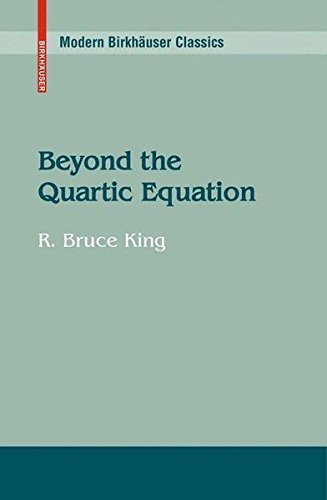
Beyond the Quartic Equation (Modern Birkhäuser Classics) 1st ed. 1996. 2nd printing 2008 Edition, Kindle Edition
Product details
| Management number | 221760458 | Release Date | 2026/05/03 | List Price | US$40.66 | Model Number | 221760458 | ||
|---|---|---|---|---|---|---|---|---|---|
| Category | |||||||||
One of the landmarks in the history of mathematics is the proof of the nonex- tence of algorithms based solely on radicals and elementary arithmetic operations (addition, subtraction, multiplication, and division) for solutions of general al- braic equations of degrees higher than four. This proof by the French mathema- cian Evariste Galois in the early nineteenth century used the then novel concept of the permutation symmetry of the roots of algebraic equations and led to the invention of group theory, an area of mathematics now nearly two centuries old that has had extensive applications in the physical sciences in recent decades. The radical-based algorithms for solutions of general algebraic equations of degrees 2 (quadratic equations), 3 (cubic equations), and 4 (quartic equations) have been well-known for a number of centuries. The quadratic equation algorithm uses a single square root, the cubic equation algorithm uses a square root inside a cube root, and the quartic equation algorithm combines the cubic and quadratic equation algorithms with no new features. The details of the formulas for these equations of degree d(d = 2,3,4) relate to the properties of the corresponding symmetric groups Sd which are isomorphic to the symmetries of the equilateral triangle for d = 3 and the regular tetrahedron for d — 4. Read more
| XRay | Not Enabled |
|---|---|
| ISBN13 | 978-0817648497 |
| Edition | 1st ed. 1996. 2nd printing 2008 |
| Language | English |
| File size | 3.2 MB |
| Page Flip | Not Enabled |
| Publisher | Birkhäuser |
| Word Wise | Not Enabled |
| Print length | 160 pages |
| Accessibility | Learn more |
| Publication date | January 16, 2009 |
| Enhanced typesetting | Not Enabled |
Bestseller ranking
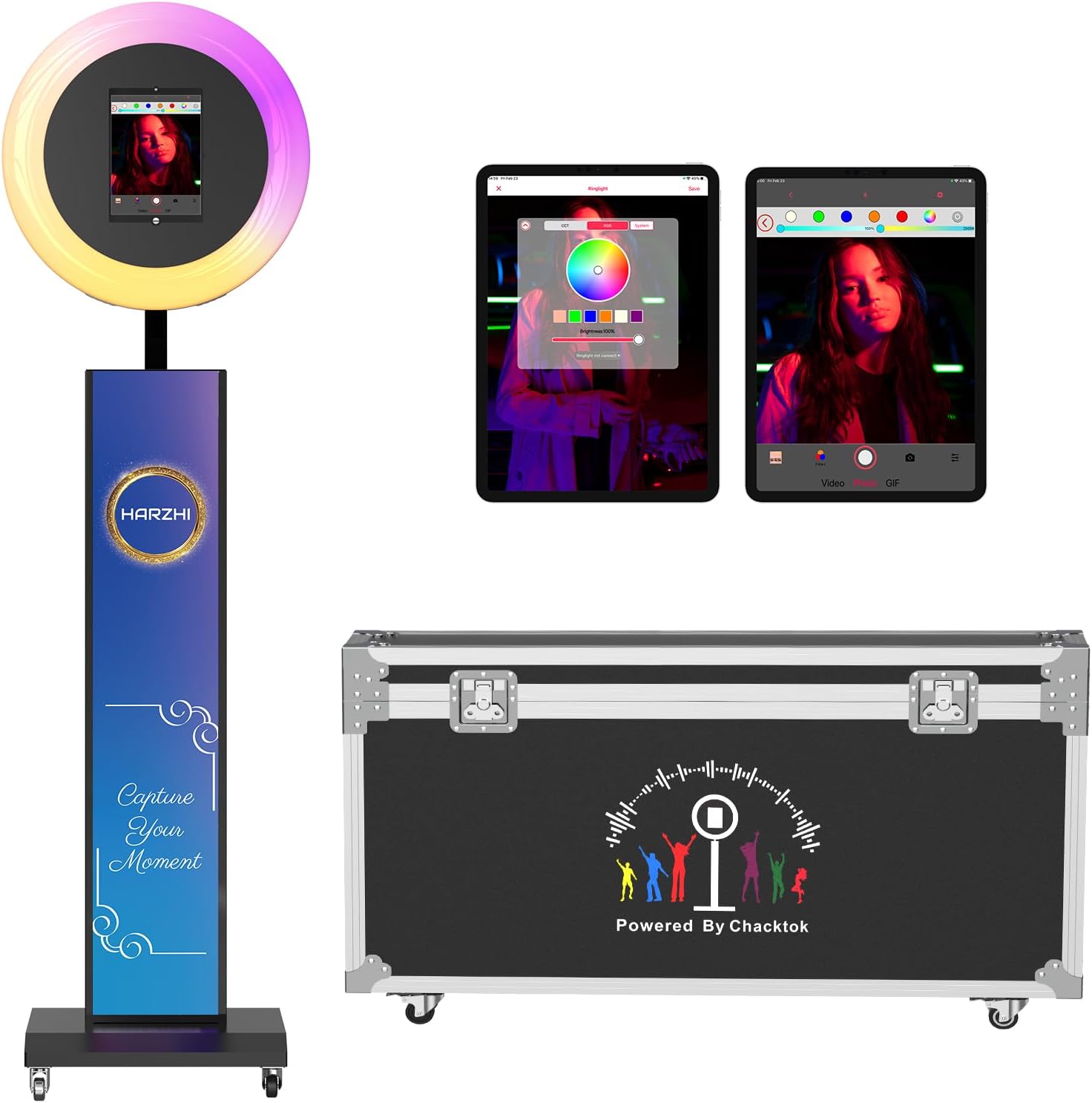
Posing Props


Customers who viewed this product also viewed
Abstract

![Applied Abstract Algebra with MapleTM and MATLAB (Textbooks in Mathematics) [Print Replica] Kindle Edition](https://m.media-amazon.com/images/I/81JSQlM4r6L._SL1500_.jpg)
![Commutative Algebra (De Gruyter Textbook) [Print Replica] Kindle Edition](https://m.media-amazon.com/images/I/61n-yL38XpL.jpg)
Correction of product information
If you notice any omissions or errors in the product information on this page, please use the correction request form below.
Correction Request Form